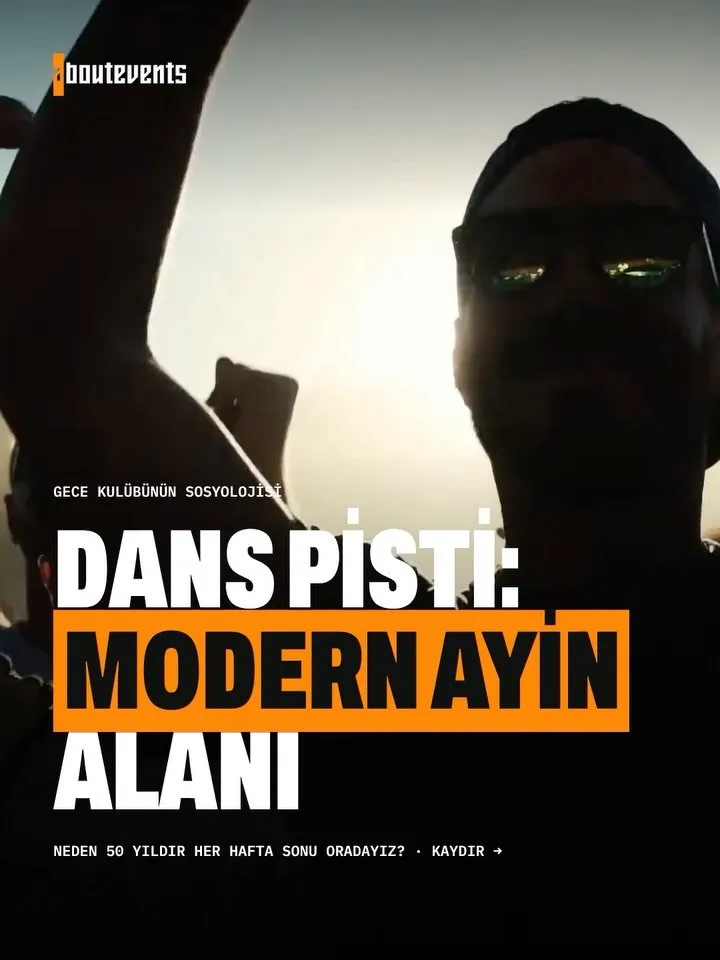
Nightclub sociology: the "ritual" on the dance floor
From Durkheim to Turner, from a silent disco experiment to bass frequencies: why do we meet on the dance floor every weekend?
In September, Anyma's Istanbul concert was cancelled over claims of a "satanic ritual". So what do sociologists say about the "ritual" on the dance floor?
Collective effervescence
Sociologist Émile Durkheim called the intense feeling people experience when they come together and share the same ritual "collective effervescence". In these moments, individuals feel like part of a larger whole. A festival site where thousands wait for the same drop at the same moment is one of the most vivid examples of this concept today.
Status stays at the door
Anthropologist Victor Turner described an in-between state in rituals where people shed their everyday status. Something similar happens on the dance floor: who you are and what you do stay at the door. Inside, everyone is simply a person moving to the same music.
What does science say?
A silent disco experiment in Oxford showed that people dancing in sync to the same music felt closer to one another and had higher pain thresholds. Another study revealed that even very low bass frequencies the ear can't consciously hear can make people dance more.
Why have we been here for 50 years?
Perhaps what makes the dance floor so powerful is that it gives back the collective experiences we've lost in modern life. The word ritual may sound frightening; but the ritual sociologists describe is nothing more than people coming together and feeling something together.
Where's your ritual space?
Footage: Awakenings, Anyma, Sunrise Festival, Burning Man, Colorado College, Pexels.